Check out my review of Faces of Death on Pajiba.com
Check out my review of Faces of Death on Pajiba.com

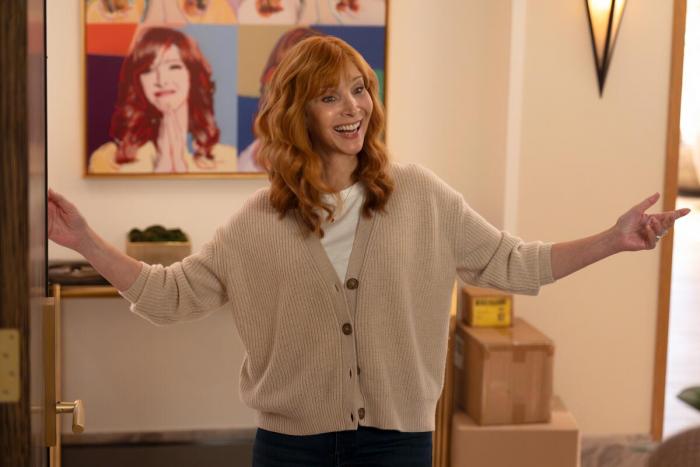
Check out my thoughts about The Comeback Season 3 on Pajiba.com

I just finished waxing poetic about horror coming from the north and the ingenuity of filmmakers up here. Naturally, leapt at the chance to consume a found footage gem that seems completely homegrown.
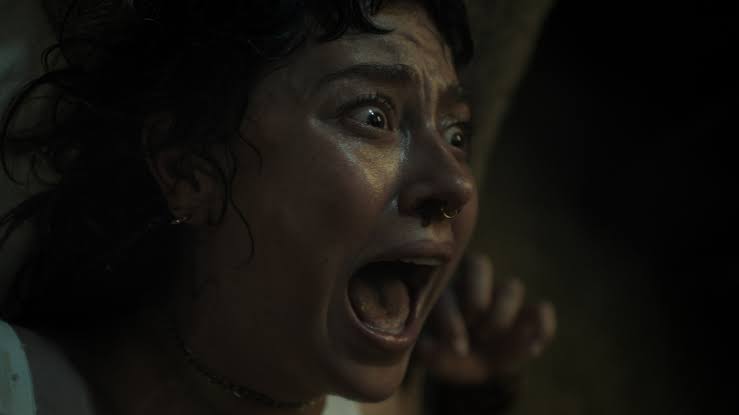
Hunting Matthew Nichols is a broad showing from Markian Tarasiuk who cowrote, directed and stars in this debut. As a warped version of himself, he plays a filmmaker making a documentary with Tara Nichols (Miranda MacDougall) about her brother and his friend who mysteriously went missing decades ago. Matthew Nichols and Jordan Reimer disappeared while making a film in the woods, and after an arduous investigation, their situation remained unresolved. Now, with resources and gusto, Tara, Mark, and Ryan (McDonald also as “himself) are seeking out the truth behind the disappearance and just what is behind those allegations of connections to the occult.
This film employs the Hell House LLC approach to found footage, serving as a mockumentary while splicing in some impossible raw footage. It’s not at all shy about its inspiration being The Blair Witch Project, and there are even clips of the two boys shooting homage and of Tara and Mark setting up in the woods like that ill-fated trio. From the trailer, I was reminded of Horror in the High Dessert and how the blend of filming styles would culminate in a terrifying finale. Hunting Matthew Nichols applies all of this well, using documentary title cards and access for exposition and mood then marking it with terrifying footage and overlays. Shifting from modern HD to fuzzy handheld video adds texture to the appearance, adding a meta-reverence to found footage of old and a quick shorthand to understanding the timeline. Like its inspirations and cohorts, it uses the camera as a light source to best capture its gruesome finale.
Much is saved for the film’s big finish, but that’s in no way a fault. The movie declines cheap tricks and buildup, but it does so at the risk of sending off a bored audience. At a tight ninetyish minutes, there’s not much waiting, but there is more spent on the investigative elements than the scares. At one point, a piece of evidence is consumed by the characters and the audience only gets the sound while watching the characters react. It’s a really clever way to save it’s scares for the finale and employ different sorts of scare tactics to keep the energy alive. Using a trio allows the camera to capture intimate conversations without having to eke out excuses for why they’re being recorded, and allows for Tara to have her moments while the other two reason it. Tarasiuk is adept within this genre and uses what might otherwise be limitations to his advantage.
Of course, there’s also the Canadiana. The movie takes place on Vancouver Island and they use the unforgiving terrain for their story, especially making it possible that the boys were lost to a ravine. Discussing Reimer’s family and the issues Indigenous peoples might have with police adds colour to a story that feels true to its locale.
Hunting Matthew Nichols always seems to call its shots, mentioning its cohorts then emulating their style, and Tarasiuk and his team have no doubt sunk their ball. Their slice of Canadian horror once again shows what a committed filmmaker is capable of, and with strong performances (MacDougall had to work) and crafty camerawork, he’s entered the canon of solid found footage features for horror fans’ delight.
Hunting Matthew Nichols hit theaters April 10, 2026

Check out my review of Forbidden Fruits on FANGORIA.com

Check out my review of 1000 Women in Horror on FANGORIA.com

When it was still doing the festival circuit, I listed Undertone as one of the best horror movies coming out of Fantasia 2025. I described it as being like experiencing Paranormal Activity if it was in audio format, so it delighted but didn’t surprise me that during the run, director Ian Tuason was grabbed to helm the eighth installment. Now with a shiny new title card from A24, fresh voice acting (hello, Adam DiMarco), a tightened title (“drop the ‘the’”), and a tenser edit (from Sonny Atkins), Undertone is ready to terrify a larger audience with its punishing audio track.
Evy (Nina Kiri) and Justin (DiMarco) are a pair of podcast hosts who squeeze recordings into their challenging schedules. Justin is recording from the UK and Evy is marooned to her childhood home to provide support for her mother’s palliative care, so the duo records their spooky show at 3:00am her time. Typically playing off each other as the skeptic-versus-the-believer exploring supernatural true crime phenomena, the two enter strange new territory when they live record their reactions to ten audio clips sent to the show via cryptic email. The clips start off like the early moments in the aforementioned Paranormal Activity, with audio of Mike (Jeff Yung) recording his partner, Jessa (Keana Lyn Bastidas) talking in her sleep, but things escalate when Jessa starts singing haunting kid’s songs in reverse. The duo does their best to plow through the remaining audio to cobble together a compelling episode, but they’re often interrupted by a need for sleep, an urgent call, or a bump in the night.
Evy has mostly protected herself from fear with her skepticism, but that changes when she finds herself connecting more and more to the audio. As references to the demon Abyzou ramp up, Evy considers if she is the next target for a malevolent force whose screams seem to transcend her plane.
Again, Undertone lives and dies by its audio, the entire movie taking place in a single location with Evy’s headphones as a gateway between worlds. Every crunch of cereal, whistle of a kettle, or tick of a clock is an anti-ASMR stab in the ear creating a persistent sense of unease. The audio is invasive, taking up space in Evy’s home, asking the audience to consider what might have taken place just over her shoulder. Tuason and his DOP, Graham Beasley, went to the Mike Flanagan and Leigh Whannel school of weaponizing negative space and they use empty corners of Evy’s house to ask the audience to use their imaginations and the audio to fill in haunts. Shots of Evy’s back leave her looking so vulnerable to the tin cans placed atop her ears. The only faces we ever truly see are Evy’s and her mother’s, forcing us into her same isolation. Evy might leave the house, but the camera doesn’t and paired with toggling shots between Evy or the entity’s POV, it makes the entire experience claustrophobic forcing the audience to fester in dreadful seclusion.
Undertone is sometimes a grab bag of horror hits, taking its concept of an audio track as a conduit and decorating it with religious iconography, haunted songs and myths, and even a fugue state crayon scratch of something scary. But with that, its guerilla Canadian horror filmmaking at its finest; a liminal horror feature put together by scrappy bubbling creatives. The set is the director’s house, the audio clips were recorded before principal photography, and death rattles and in-world phone calls were recorded by sound guys into iPhones. Something that started with everyone on set placing objects in frame then hiding to add scares to long shots turned into an entire theater reacting to a mirror scare like the audience gasping at the wall climber in Hereditary.
Undertone is a refreshing flip on screen life that uses phone calls and audio clips to bring a large story into the small room of a target protagonist. Is it a lesson in catholic guilt for a skeptic who’s been avoiding her mother’s religious zeal? Perhaps. But above all, it’s a tight and contained terror that will leave audiences trying to find a way to use their blanket to cover their ears.
Undertone hists theaters March 13, 2026

It can be challenging to put your phone away for the entire runtime of a movie and challenging still for some to not immediately grab it as the credits roll to log that movie on an app or post a quick reaction. Social media and the dopamine box in our pockets sing a sweet siren song, one that will hopefully be dulled by Good Luck, Have Fun, Don’t Die. In a meta-comment that asks us to pay attention, this latest wacky surrealist dark comedy has us to consider what the internet and AI are taking from us, and encourages us to act sooner rather than later.
Sam Rockwell leads as no Kyle Reese but an unnamed time traveler purporting to be from a bleak not-so-distant future. He’s seen the collapse of modern life due to a propensity towards social media brain rot that left half the population dead and the other unknowingly living in an apocalyptic hellscape. With a grain of knowledge that this night in this diner is the way to solve the future crisis, the time traveler gathers whatever combination of people seem willing to join his revolution hoping to find the magical combination that makes his plan succeed lest he have to start the night over again. While the future sees humanity doomed to live inside a utopic videogame, the man seems to live in a modern one where any failure means he must start from the beginning. On his hundredth or so attempt, he seems as close as ever.
Director Gore Verbinski came out of a decade-long retirement to get his scent on this zany dark comedy. Some of his slappier sensibilities came along for the ride, imbued mostly within Rockwell as the weirdo lead in a dirty clear trenchcoat you would follow into battle. This close-to-home feature about where we all seem to be headed is as fun as possible, marked with dark deadpan humour and an ensemble cast you won’t believe gave themselves over.
For all its zany bits, social satire, and pitch-black lampoons of our bizarre social media loving planet, there is a distinct lack of real teeth. Sure, it’s dystopic that teachers have caved to students and their phones and that cloned children are subsidized by the government if they’re victims of school shootings, but the satire hesitates to push past the glaring and lacks that brutal bite. (In good news for those who enjoy this movie and want more of the same) Films like Spontaneous have employed such bleak satire before with sharper effect, making Good Luck, Have Fun, Don’t Die seem like a flick trying to catch up to its cohorts. It’s full up with references to Terminator, The Faculty, and the like, some meta-films themselves that have already been rolled into movies like Cooties, Ick, and Mom and Dad.
The non-linear storytelling is the strongest element of the narrative as it has the audience find the hero already well into his crusade, then gives it time to take in haunting vignettes that highlight just how weird things have gotten. Time is well spent with the complacent teachers struggling to capture students’ attention, a grieving mother trying to bond with an ad supported clone, and a young woman allergic to wi-fi. But for as zany as the vignettes are, they are built on similar on-the-nose messaging that’s been better executed by similar movies.
Good Luck, Have Fun, Don’t Die is exciting for the fact that it’s got a familiar cast and crew that will draw broader audiences into the weird-sci-fi-dark-comedy fray that’ll leave people primed to be referred to things like Relax, I’m From the Future, Rumours, Dream Scenario, and those others I couldn’t resist mentioning above.
Good Luck, Have Fun, Don’t Die hits theaters February 13, 2026

Two decades was a worthy waiting period for the third installment of the beloved British zombie series, but nary a year has passed before we’ve been graced with more. Named for the memento mori crafted by the series’ most tender character, 28 Years Later: The Bone Temple continues the terrifying tale of a deadly infection while never shedding the warmth that makes the series worth returning to. With Ralph Fiennes leading the film’s sweetest, mad, and most jarring moments, this follow up feature gives more weight to the idea that this might be the most consistently powerful cinema franchise.
Picking up where the last film left off, Spike (Alfie Williams)- who is now called “Jimmy” – has become a reluctant new member of Jimmy’s fingers. He is initiated via a gruesome fight to the death, and his prize is that he must don a shaggy blonde wig, give up his personal identity, and submit to the whims of Sir Lord Jimmy Crystal (Jack O’Connell) and his violent delights. Much like Jim and Selena before him, Spike has been absorbed by a nightmare group of humans he must depend upon for survival.
Meanwhile and elsewhere, Dr. Ian Kelson (Ralph Fiennes, in an extension of a career defining performance within a career full up with them) is still studying the whims of the beasts in the woods, coming closer to an Alpha he’s named Samson (Chi Lewis-Parry). Samson, a spine ripping brain-eater, seems to find solace in Kelson’s choice weapon: a tranquilizer dart full up with morphine. Though the conversation is one sided, the communication is not, and Kelson’s dart provides an opening for him to consider if the infected have truly departed from their humanity.
The two groups might never cross, but Sir Jimmy is placed at the feet of Kelson when one of the members of his squad mistakes him for “Old Nick,” or Satan as it were, the man from whom Sir Jimmy claims to have gotten his status and marching orders.
The two prime stories are interspliced and carry with them distinct tones, the two tones that have made the 28 series such a lasting view of humanity in the time of gruesome crisis. The Jimmys’ are violent and cruel, their tribulations bloody and ablaze. Kelson and Samson experience tenderness, fear, hope, and a simple world where pieces of humanity are clutched to by a man in a world without any. Newcomer director, Nia DaCosta (Candyman, Hedda, et al) takes the reins from Danny Boyle who directed 28 Days Later and 28 Years Later and continues to prove herself one of the most important working filmmakers. She has dipped her toes into a well-established sandbox and managed to make the film feel completely consistent to the franchise while bringing her own voice to it. There’s less of the shaky cam panicked violence and more of the tender moments and brighter blood which makes everything feel familiar while fresh.
So much is jammed into what is purported to be a second installment in a new trilogy, but it never feels overstuffed. A second part can be doomed to feel like a bridge between a new story and its finale, but 28 Years Later: The Bone Temple (which is still written by series scribe, Alex Garland) refuses to let that neuter its stakes. Anyone can die, and stories are brought to natural conclusions in time to welcome new ones for the presumed finale. Further, things about the infected are escalated in ways that will leave zombie nerds flipping through notebook pages, wondering if we’ve ever seen the infected in these lights before. Have we seen them at rest? Consuming brains? Just being? It’s sometimes hard to accept such a twist on the franchise (and genre) but damn if it’s not compelling.
It’s perhaps tired from me, but it continues to be magical how this series represents the modern world. Tales of clutching to elements of joy in a world where one cannot let their guard down, and what it means to be alive on a cruel planet that didn’t come together for a global crisis seem ever prescient and increasingly beautiful. “I remember the certainty,” Kelson reflects, something people in this era might look back upon with a fleeting affection. Good luck to the rest of 2026 because it’s going to be difficult to best this titan.
28 Years Later: The Bone Temple hits theaters January 16, 2026

One need not brace for the trite biopic standard when sitting down to watch Josh Safdie’s latest. The story of Marty Reisman (Marty Mauser by way of Timothée Chalamet in the film) is loosely adapted for this snappy drama that, if anything, uses ping pong as a background timekeeping device more than it does a major plot point. Marty Supreme is much more the next story of a fallible Safdie hurricane than it is a historical tribute to a late pioneer. And it’s all the better for it.
Mauser is in a similar precarious position to his cohorts in Howard Ratner (Uncut Gems) and Connie Nikas (Good Time), staying just barely avoiding drowning but choosing to sprint rather than tread water. He’s a sharp mouthed brat (a pisk, if you will) adept at the kind of charm that’s only effective until he keeps on talking. He’s an eye on an important prize: a ping pong tournament abroad that will grant him global acclaim. Mauser needs the cash to get himself there, and the resources to get there in style. So sets off his calamitous sprint through match losses, affairs, a nagging mother, a would-be business partner, and a pregnant old flame with a protective beau. Marty is a hurricane, like Safdie protagonists before him (though this one was crafted without Benny- but with their longtime collaborator, Ronald Bronstein). He is constantly in messes of his own making, something he feels slighted by as he is just doing “what it takes” to succeed. Mauser uses people as rungs as he climbs to what he believes to be his manifest destiny.
Safdie sets his frantic drama in 1950s New York, where a generation of Jewish immigrants are still reeling from the holocaust. There’s the sort of scrappiness in Mauser one might expect to see in tales of post WWII gangsters like Benny Siegel or Meyer Lansky, men contending with being on the receiving end of a particular form of racism and refusing to be brought down. The backdrop allows Mauser to self-justify his sharpness and entitlement and also allows him to better appear a burden to Americans reeling from a war where they were made to liberate his people. It also lends Mauser a shorthand to interact with others in his neighbourhood and build the sorts of allyships that are only slightly more difficult to bruise with his antics.
Chalamet, who was already a favourite around cinephile circles, earns his place as a lead in a contender here. His delivery of Mauser’s snappy dialogue is deliciously funny, and his playful smugness is endlessly effective. Looking as much like a bar mitzvah boy as he does a snappily dressed 20th century man, he is able to play with the earnestness and entitlement of a man who has both childlike wonder and the weight of adulthood rushing through him. He’s complimented by titans in his co-stars like Gwyneth Paltrow, but there’s reason the character is titular.
Marty Supreme is a frantic tale of “pride before the fall” that’s dressed up like the most gorgeous period piece complete with fresh garments and detailed storefronts. Set against a table tennis tournament is the story of a snappy young pisk whose success comes from disobedience, the disobedience inherited into a people who were on the wrong side of a quest for extermination.
Marty Supreme hits theaters December 25, 2025

Buried between the larger-than-life stories about the crime that shaped twentieth century North America is a lesser-known story of the Little Lorraine fisherman who got involved in international cocaine smuggling. Though details are difficult to find, there exists a Canadian diddy by Adam Baldwin called “Lighthouse in Little Lorraine” about some former miners getting caught up after taking a job with the narrator’s mysterious Uncle Huey. The music video for the narrative track was directed by Andy Hines which he eventually pivoted into a proof-of-concept for what is now his debut feature film, Little Lorraine.
Little Lorraine takes place in the titular town following a small gang of miners who are left without work after a collapse takes some of their colleagues and leaves their mine unusable. Faced with the decision of taking a small payout and leaving their homes or looking for work elsewhere, Jimmy (Stephen Amell) considers a cryptic offer from his mysterious Uncle Huey (Stephen McHattie) who has rocked back into town with a lobster fishing boat. With few options and a hard-to-shake rage against their union, Jimmy and his pals board Huey’s ship for a modest life of lobster catching. But things with his estranged flakey uncle aren’t as simple as they seem and the gang is quickly initiated into the world of international drug smuggling, something for which there’s no easy way out.
Hines’s tale of small-town men being thrust into the world of crime will feel familiar to crime drama fans who will expect the usual beats of a rapid rise followed by a paranoia led fall. Little Lorraine isn’t all-the-way surprising in its story beats, but it doesn’t need to be as it applied the crime drama formula to a fresh locale intent on exploring the complexities of maritime men in the 1980s. While its cohorts are no doubt crime dramas, it also feels a compelling companion to this year’s 28 Years Later as it studies manhood in an otherwise simple life with a larger-than-life conflict looming overhead.
The stellar cast of not just Amell and McHattie, but Matt Walsh, Rhys Darby, Sean Astin, also includes the acting debut of J Balvin as the fish-out-of-water Interpol agent dropped into a small town. Though I so badly wished for his character to be more consequential beyond just shaking up Huey and the gang, he successfully plays the man from another world dropped into the simple life almost like the characters of In Bruges but with far less subtext about purgatory.
Little Lorraine is as unassuming as the wives of miners and quickly grows into a worthy crime drama about how fast life comes at you and the ills of paranoia and distrust so easily bringing calamity in a high-stakes environment. Though its emotional climax happens too quickly, it sets off a brutal finale focused on what it means to stand together as a town. For all the fraught and direct dialogue that could have been skipped, and all the times you beg for Darby or Walsh to have had more to do to build up to the larger moments, Little Lorraine is still a successful crime drama that stands firmly as a love letter to small town maritime Canada. Like the song says, “there’s a goldmine out on the ocean and a lighthouse in Little Lorraine.”
Little Lorraine played the Toronto International Film Festival. It was sold to Vaneast Pictures and release details are tbd.
In lieu of a trailer, enjoy the music video.